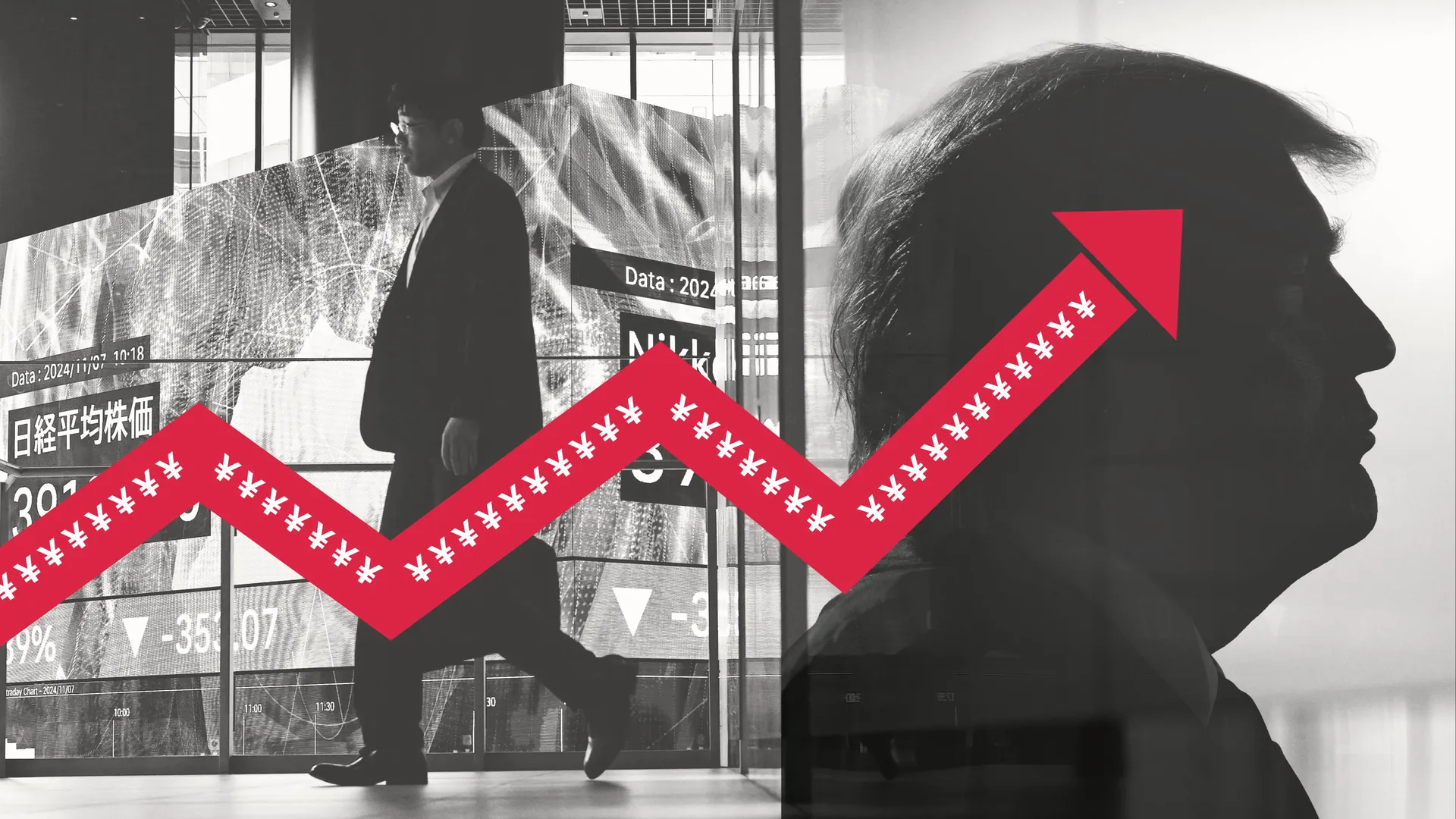
Within a few hours of Donald Trump securing his victory in the US, Japanese media was using the term matatora — the third Trump-related entry in Japan’s dictionary of escalating disquiet at his possible return.
The first word in the sequence, moshitora (“what if Trump”), was current in the latter months of 2023 and set a tone of background nervousness in government, corporate and market circles. The second, hobotora (“most likely Trump”), has been in widespread use this year, demanding more serious fretting around geopolitics, inflation and trade risk. Matatora (“Trump is back”) grants a general licence to gasp.
For some, though, the word has unleashed a bullish snort and an argument that — absent embroilment in regional conflict or some other unforeseen calamity — Japan may be better placed than almost any other developed market outside the US to flourish over the next few years.
Tokyo stocks, declares Neil Newman, a strategist who has been covering Japan since the 1980s, have rarely been so primed for ignition. If anything, he says, the political paralysis to emerge from Japan’s messy general election last month, and the implied guarantee of no bad policymaking, should only make the market more attractive to big global funds.
It is a beguiling argument, given an extra sparkle by the various volatile knee-jerk market moves in Tokyo that accompanied Wednesday’s news: gains for exporters (on assumptions of an even weaker yen), defence industry stocks (Trump will demand allies spend more on their militaries), banks (inflation will rise and so will interest rates) and companies that stand to benefit from the (probably accelerated while Trump is in power) reshoring of Japan’s semiconductor industry.
Nicholas Smith, a strategist at CLSA, also sees the prospect of a six-month boost for Japan as animal spirits lift the financial sector. Global capital spending, frozen in the run-up to the US election, should now thaw quickly, favouring Japan.
The longer-term case for Japanese equities under Trump, though, depends on two main lines of reasoning. The first is that Shanghai and Hong Kong’s loss will be Tokyo’s gain. US-China relations under the Biden administration have not been good, and there is reason to expect them to worsen under Trump. US pension funds have already come under pressure to stop or withdraw investment, while China-based dealmaking led by US private equity has all but fallen silent. Some US pension money may have returned to Hong Kong and China in recent months, but that could quickly reverse under Trump. Critically, the flows may well divert to Japan by default as the only developed market in Asia with the breadth and depth to absorb them.
A second argument is that Japan’s recent descent into political stasis — the ruling Liberal Democratic party and its leader, Shigeru Ishiba, have yet to pull together a working government — is not, for the stock market, a big problem. Ishiba and his party are too weak to disturb the economy’s momentum, or unravel the progress on corporate governance reform and restructuring that appeals so strongly to foreign investors.
There are clearly powerful counter-cases to all this, not least the chance that the Trump administration is associated with such elevated levels of geopolitical uncertainty that investors retreat to the sort of trading patterns that flee risk and tend to reduce exposure to Japan.
And though Japan may indeed be geared to global growth, a significant chunk of that is exposure to China. Even if Japanese companies can navigate their way through higher tariffs and intensified “pick-a-side” rhetoric from Washington, China itself could be far less rewarding than in the past.
On the political front, the risks around Ishiba’s dismal gamble on a general election could prove much greater than Newman and other bulls suppose. The price paid for the prime minister’s weakness — an inability to communicate Japan’s importance to Trump, or present himself as likely to be around long enough to be worth Trump caring about — will be high.
Since early 2024, when the Nikkei 225 Average finally surpassed the record set in 1989, the brokers’ mantra has been that Japan is Back. A succession of big US and European long-only funds have come to Tokyo to check for themselves that the sales pitch holds true. A growing number appear to have returned convinced but without the sort of comfort levels needed for a really big reallocation to Japan. They had in any case been holding fire until after the US election.
Trump is Back may ensure that Japan stays Back. It may also set Japan way, way back.